|
bbc world service: outlook
august 2003
interviewer: heather payton
Ten minute interview on the subject of
urban exploration. Conducted at Paddock with permission of
the owners. Nick Catford, of Sub-Brit organised the visit
and was interviewed about the history of the bunker. Later
repeated on Radio Four.
See also: Paddock | Far From The Light Of Day
|

|
wired magazine: mental!
october 2003
Commissioned piece from the editor Angela, this three page
article for this Croydon Listings Magazine was a tongue-in-cheek history of
the asylum emphazing its legends and reputation. A frightener for their
Halloween issue. Also featured on the front cover.
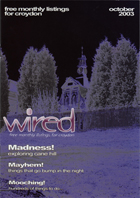
first page (pdf) | second page (pdf) | third page (pdf)
|

|
bbc 4: restoration nation (eastern region)
august 2004
director: clive dunn
The BBC were keen to devote ten minutes to a piece about asylums but the original plan
fell through (the owners of Severalls wouldn't give permission). Successfully
suggested a substitute (Rauceby) and quickly found ex-staff for interviews. Was
interviewed myself on the history of the asylum, being titled an "Asylum Historian".
Restoration Nation: Asylums (6MB Windows WMV file)
|

|
digital camera magazine: top ten derelict buildings
september 2004
interviewer: george cairns
The top ten derelict buildings feature resulted in a telephone interview about urban exploration and
my corridor shot of Severalls being rated as #2.
Top Ten Derelict Buildings
|

|
the independent: asylum seekers
4th july 2005
interviewer: rhodri marsden
photographer: ben stansall
Took The Independent urban exploring at West Park. Resulted in
a full page colour feature and some now iconic pictures from award winning
photographer Ben Stansall.
Full unedited text of feature
More unpublished pictures
|

|
D - La Repubblica delle donne: london explorers
15th april 2006
interviewer: nicola scevola
Mechanised, Major Tom and I took two reporters
for two different foreign papers around Severalls. The result
was a three page feature in the Italian La Repubblica. Pictures by
Mechanised, Nicola and myself.
first page (pdf) | second page (pdf) | third page (pdf)
|

|
metro: what is in that old house?
20th april 2006
interviewer: oliver stallwood
After a couple of telephone interviews with Oliver Stallwood, and some dubious
changes thanks to a sub-editor, urban exploration hit London's free newspape.
what is in that old house?
|

|
the sun: what a cell-out
18th august 2006
reporter: harry macadam
Supplied pictures of Aldington Prison for The Sun's
feature on unused prisons. One and a half page spread. References to me and urban exploration
were edited out at the last minute.
what a cell-out
|

|
construction history society: urban explorers
august 2006
I was asked to write a piece for the Construction History Society's
newsletter. To my knowledge, this is the first time an article on urban exploration
has appeared in an academic publication. Secondly, it was far more about the aims
and limitations of urbex itself rather than a piece about asylums etc.
Urban Explorers At The National Gas Turbine Establishment
|

|
inside out: the urban explorer (eastern region)
9th october 2006
director: martin friend
The spec: a piece about urbex, shot as true urbex. Lawyers in the upper echelons of the BBC
gave their permission. However, it would require a very stripped down film crew: cameraman,
director and presenter. Two day shoot at two locations. The result? I presented ten minutes of
prime time BBC One.
coming soon
|

|
british forces broadcasting: the cox & bumfrey show
14th october 2006
interviewers: stephen bumfrey and hannah cox
Early Saturday morning, I was interviewed about urban exploration on BFBS Radio One. A quick
five-ten minute chat with hosts Stephen Bumfrey and Hannah Cox ensured that
all the British Forces were brought up to date with my hobby of scrambling inside derelict buildings.
coming soon
|

|
treefingers: shoebox archive
october 2006
album artwork
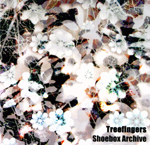
Sleeve designers Thomas Featherstone and Dale Harris used the floral wallpaper
from St Crispin for Treefinger's debut album Shoebox Archive. The
floral motif was also used throughout the album booklet and promotional material.
Floral Pattern by Simon Cornwell
Photography by Martin Featherstone and Peter Morris
Artwork by Thomas Featherstone and Dale Harris
www.myspace.com/treefingersmk
|

|
family history monthly: inside the madhouse
december 2006
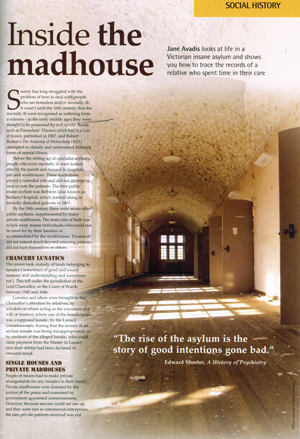
One of my brooding shots of a corridor at Warley was used to illustrate a piece on the history of
asylums in the UK.
|

|
county times
4th may 2007
reporter: tim raw
After the destruction of Beedingwood House, I offered some quotes, background and pictures of the
former house for the county newspaper. Little did I know that it would make the front page.
inferno wipes out historic mansion
|
|
|
testimony exhibition (epsom)
9th - 18th august 2007
My first exhibition.
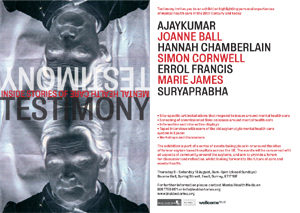
When launching their website, Testimony
held a series of exhibitions up and down the country. The first was held in Epsom, famous for the
"Epsom Cluster" of five asylums. My pictures of West Park were displayed; showing the state
of the asylum today.
"The first exhibition will be held at the Bourne Hall Museum, which has been selected
because of its position close to the Horton estate, which was the largest cluster of mental
hospitals in the world. Five hospitals (The Manor Hospital, 1899; Horton Hospital, 1902; Ewell Colony,
later St. Ebba’s, 1904; Long Grove, 1907; and West Park, 1924) covered an area of one square mile.
Between them they housed a diverse community of people experiencing mental health distress as well
as people assumed to suffer a psychiatric condition due to what was seen as deviation from the social
and moral codes of that time."
"With the exception of St Ebba’s, these hospitals are now all closed. Mental Health care went
through a transition process towards Care in the Community services, reflecting the changing attitudes
to the ways in which society provides care and support to people who experience mental health issues.
Bourne Hall Museum holds an archive of documents, photographs and artefacts taken from St. Ebba’s on
the closure of its psychiatric units. Testimony is working in partnership with the Museum to enable
the participating artists to create new contemporary art works that responds to this archive material
as well as to the Testimony archive."
|

|
blueprint
november 2007
Writing for the influential and serious Blueprint architectural magazine, Mark Chalmers offers one of the
best researched and most thought provoking pieces about the urban exploration scene in the UK.
Blueprint Article
|


|
uk web archiving consortium
january 2008
The British Library would like to invite urbex|uk to participate in web preservation programme
The British Library is a founding member of the UK Web Archiving Consortium consisting of
The British Library,
JISC (Joint Information Systems Committee), the
National Archives, the National Library of Scotland,
the National Library of Wales and the Wellcome Library. The Consortium is the national effort to archive selective representative websites
from UK web space in advance of the introduction of legal deposit for digital materials. The Archive can be seen at
www.webarchive.org.uk."
"The British Library would like to invite you to participate in this work by allowing us to archive your
web site under the terms of the appended licence. We select sites to represent aspects of UK documentary heritage
and as a result, they will remain available to researchers in the future. We aim to subsequently include the archived copy
of your web site in our permanent collections."
"There are benefits to you as a web site owner in having your publication archived by the Consortium such as
having a historical record of your web site. The Consortium aims to develop preservation mechanisms to keep your
publication accessible as hardware and software changes over time."
urbex|uk has been selected by the British Library for inclusion in the Web Archiving Consortium.
These
means the site will be archived in a permanent collection and will be available for future researchers. The
Web Archiving Consortium will take copies of the site from time-to-time to ensure that the additions I make
in the future will be added to the archive.
One of the reasons some urban explorers give for their activities is to create a historical record by photographing
buildings and places that are at risk and will otherwise be forgotten. By being archived in a national
collection, urbex|uk has achieved that aim.
|

|
love in the asylum
september 2008
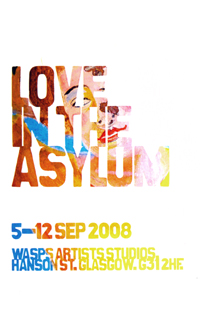
A picture of a wall mural taken at St. Crispin was used as promotion for an
art exhibition in Glasgow. The original plan was for a run of posters, but postcards were printed instead.

|

|
buckinghamshire - stories of the supernatural
october 2008
Upon its demolition the Canadian Red Cross Memorial Hospital moved from rather crappy, trashed old
hospital to the stuff of supernatural legend! As part of this transformation, its sinister ghostly stories are
told in Buckinghamshire - Stories Of The Supernatural by David Kidd-Hewitt.
The Flincher is subject of Chapter 2 where Damon, Owen and
I bring our urban exploration tales of the former hospital up-to-date.

|

|
most haunted; live!
30th october 2008
The Most Haunted! Live crew camped down in North Wales for a ghost watch within the
crumbling walls of the glorious Denbigh Asylum. Before the evening's supernatural events, I presented
a five minute piece about urban exploration, the history of lunatic asylums, and discovering the architectural
secrets of Denbigh for the first time.
|

|
susology
issue #2: december 2008
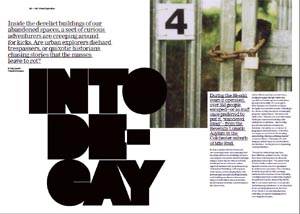
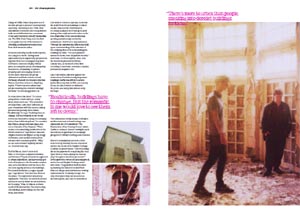
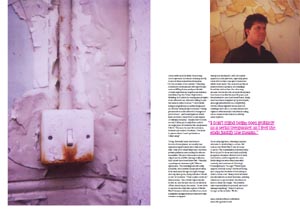
A friend of Ian Richards tracked down the original, proposed floorplans of
Severalls Hospital. So armed with the map, we planned to document Severalls
in a completely different way.
At the same time, Olly Zanetti contacted me for an interview with the new Susology.
So, it made sense to combine both.
Unfortunately we found the main buildings at Severalls barred. So, the interview was conducted
in Ivy Villa at Severalls and at Beacon Hill Fort, Harwich.
(I won’t publish the full-sized PDF files yet as the magazine is still current).
|

|
london evening standard
17th august 2009
A positive article outlining the practise of urban exploration. The journalist joined two urban explorers on a trip in London. I was
quoted on various aspects of the legalities and dos-and-don'ts.
|

|
sunday daily star
14th march 2010
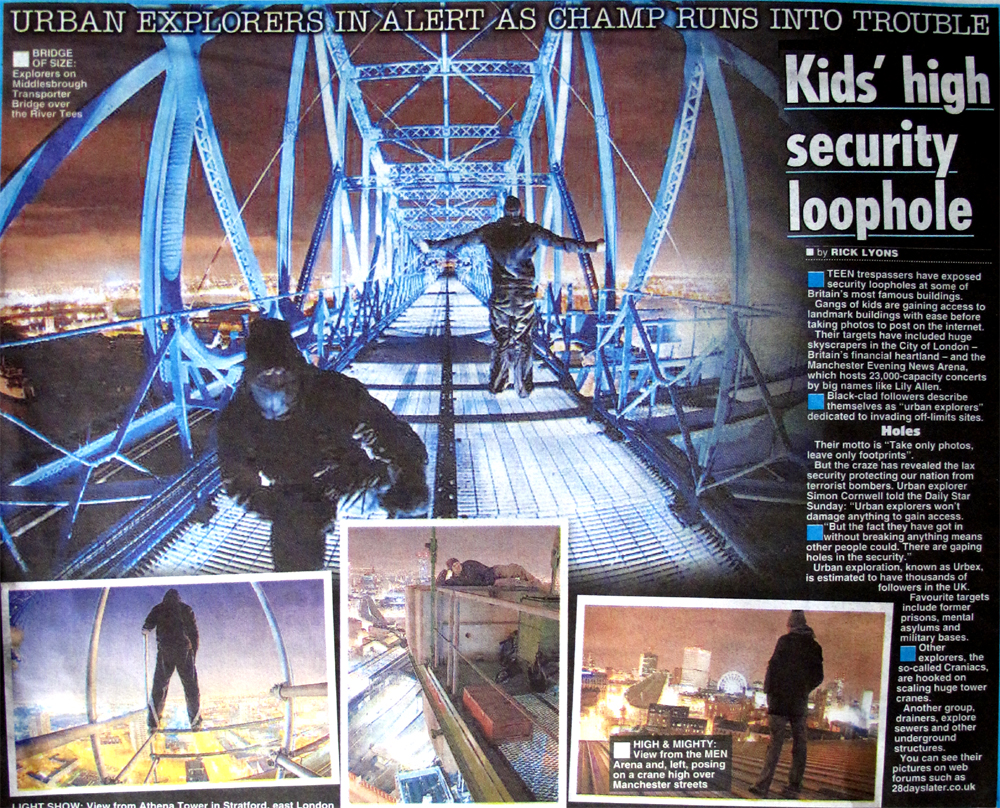
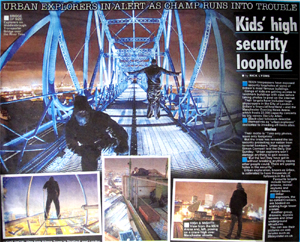
This piece by Rick Lyons links lax security (as exploited by urban explorers) with potential terror threats. The on-line version
can be read here. Whilst talking with him, I realised his
take on the subject and realised it needed discussing; plus I'm glad he included the motto and the fact that an urban explorer would not damage a
site to gain access.
So another positive, informative piece (although the picture editor went for the sensational and chose various climbing shots).
Click on the thumbnail for larger images.
|

|
eastlondonlines
22nd november 2010
The first of probably several Cane Hill Obituaries after
the fire which tore through the old Administration Block. I provided several key quotes and the photographs used to
illustrate the piece.
|

|
yahoo! news: website of the day
4th may 2011
Promoted by the detention and arrest of four people going "off-piste" in the London Underground,
Yahoo! took a look into the subject of urban exploration. After a broad overview of the subject,
they added a link, and a lost vista of Cane hill, to my website as an example.
|

|
asylum uk: urban exploration
january 2012
Jake Hanrahan grasped the mettle and took a trip to St. Crispin for a crash course in urban exploration. The article also
included an interview with me about my experiences whilst urban exploring. Unfortunately the Asylum website closed almost immediately afterwards.
|

|
asylum uk: urbex: exploring the depths of derelict hell holes
24th february 2012
Remade and remodelled, Jake Hanrahan resubmitted a longer version of his urbex article to
Sabotage Times. This includes a longer interview with me
and more pictures of his trip to St. Crispin.
|

|
cambridge 105: rebel arts radio
14th may 2012
Had a chat with Mark about all things urbex on Cambridge's community radio station. David Bowie's
The Man Who Sold The World and Simple Minds' Moscow Underground were the tracks
played during the interview, both which have urbex connections. Subjects included Cane Hill, Pyestock
and the local Uplands (now) legendary ruin.
|

|
bbc berkshire
15th january 2013
Appeared on the Breakfast Show with Andrew Peach where I was able to
give a brief run down about urban exploration and its ethics before
defending the scene against the Major Of Windsor who was having problems with
alledged petty thieves at one of his properties.
|

|
cr5 magazine: the rumours of deep shelter #4
february 2013
Lucy, the editor of local listings magazine CR5, asked if I could
contribute something historical for the publication. She wanted something on Cane Hill and Netherne
but I suggested starting the series with the long forgotten tunnels found at the base of Cane Hill itself.
page 1 and 2 (pdf) | page 3 (pdf)
|
|
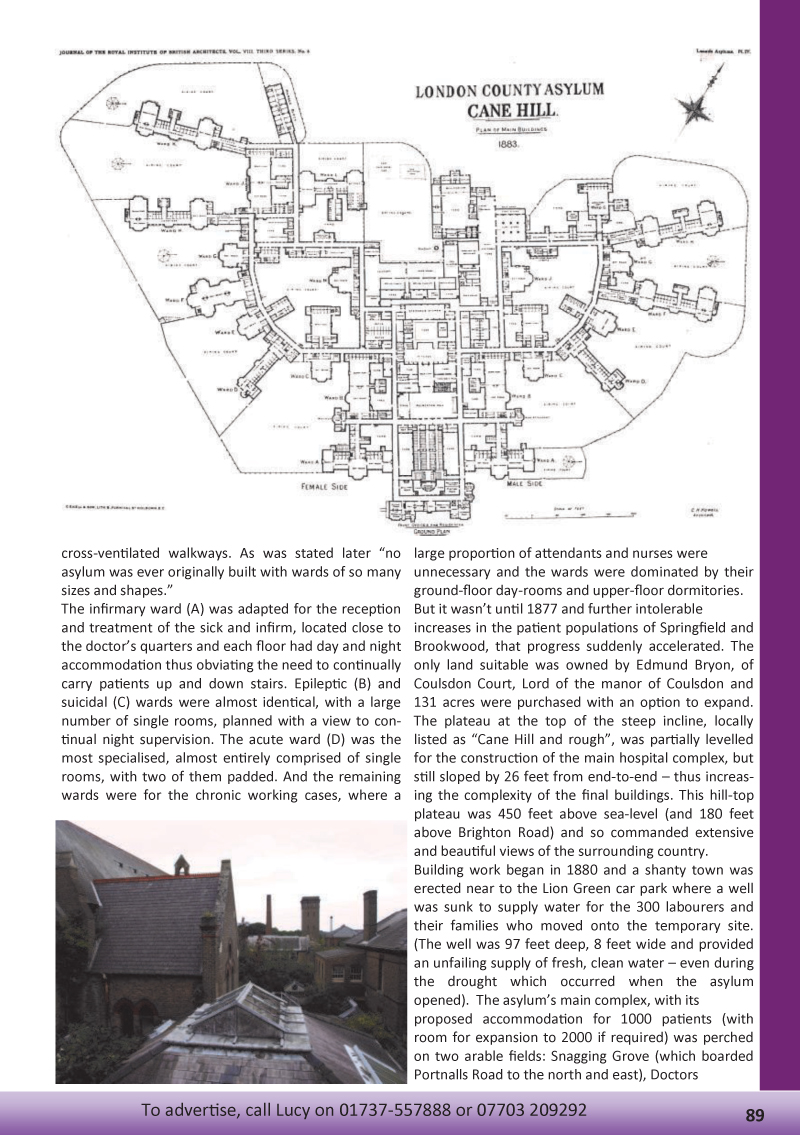
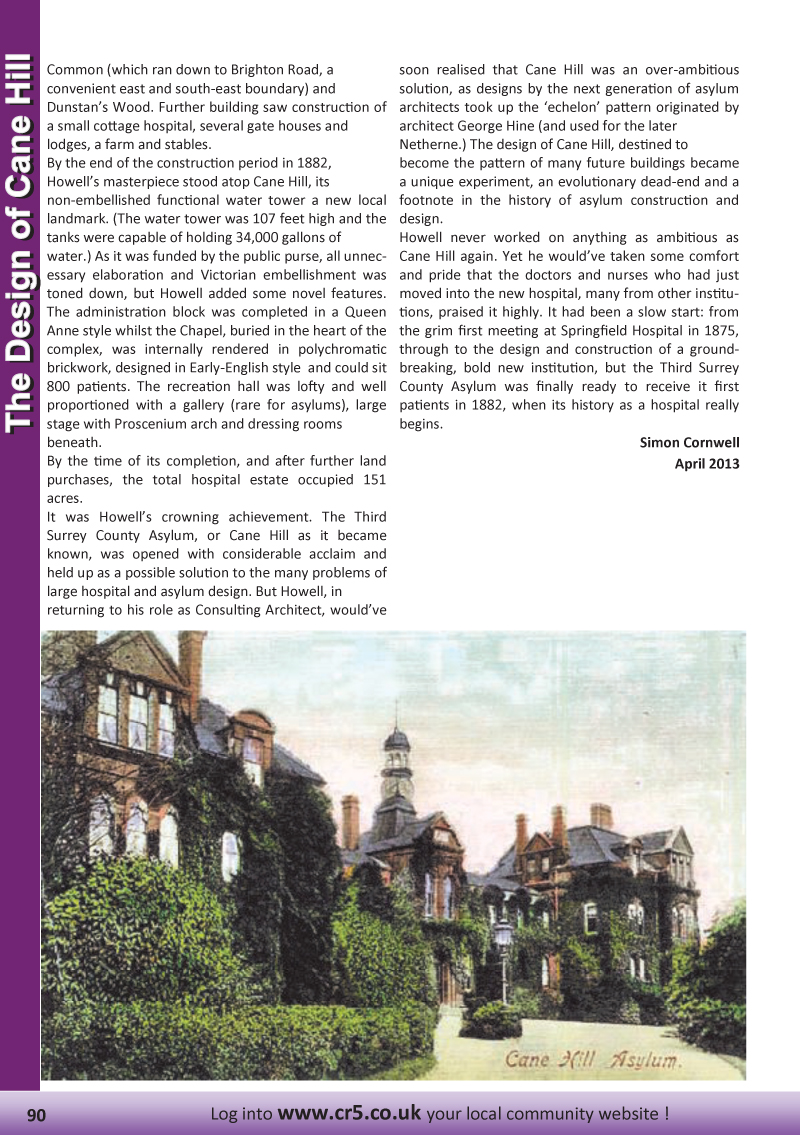
cr5 magazine: the design of cane hill
may 2013
The second article was about the design and construction of Cane Hill with special
emphasis on its architect Charles Howell.
page 1 | page 2 | page 3
|

|
bbc leeds (broadcast nationally)
13th june 2013
The Mark Forrest show is broadcast to all regional BBC radio stations
and concentrates on a local news story. Following an attempt to save some old maltings from demolition,
Mark Forrest asked how much of the old industrial landscape should be saved. I appeared
on the show to talk about the wide range of derelict buildings throughout the UK, my experiences and
whether I thought these buildings were worth preserving.
|

|
buzz: bournemouth.ac.uk
march 2013
The plan was to take Sam Thomson to RAF Upwood for a nice easy mooch, total immersion in a
derelict landscape and an introduction to urban exploration. Unfortunately due to a mix-up over train timetables, the original
plan had to be scrapped, and I only had time to show him around our local ROC Post and take part in an audio interview. But, my comments
and thoughts were included within his project at Bournemouth University.
|

|
the science museum
decemeber 2013 - august 2014
One of my imposing shots of the Adminstration Block of Warley Hospital was used by
The Science Museum as part of their Mindmaps exhibition.
|

|
credo: lgt journal on wealth culture
xvii 2013
I took Sacha Batthyany on a jaunt around Severalls many eons ago and the result of the
exploration appeared several years later in the upmarket Credo magazine. Luckily a version is also
available online.
Photographically it was difficult to "supply the goods" as they wanted pictures of me doing what I do - it was then I discovered that
I hardly ever turn the camera upon myself and always point it away. I might change that in the future, but I always felt that the subject
was far more interesting without imposing myself in the scene. Sacha was hungry for the experience - and relatively happy
about stepping over the festering dead fox in the Frog House and crawling down the muddy tunnels into Severalls.
|